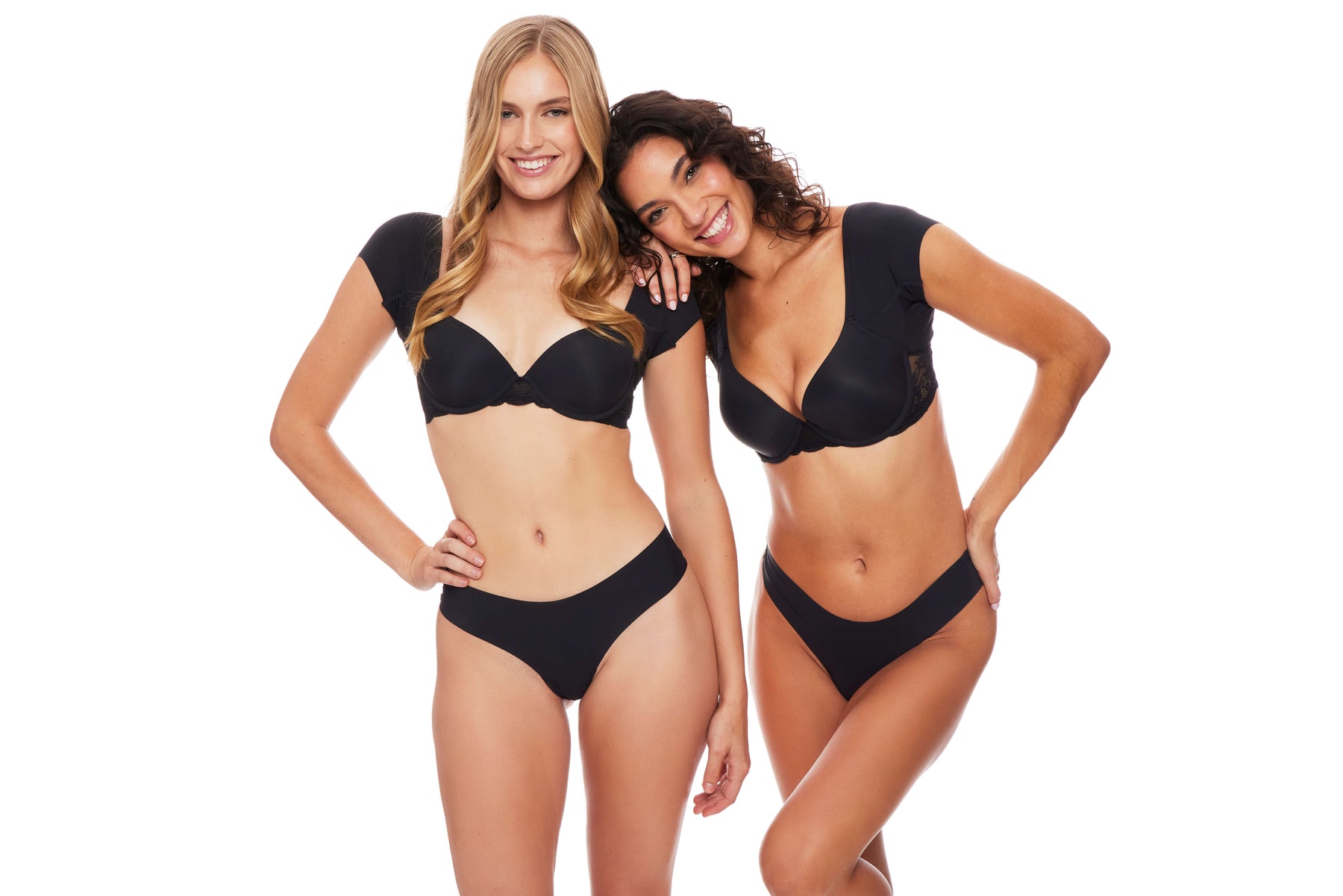
Finding the right bra size can feel surprisingly complicated. Many women wear bands that are too loose, cups that don’t fully support their shape, or styles that feel uncomfortable by midday. The result? Slipping straps, gapping cups, digging wires, poor posture, and clothes that never seem to lay quite right.
At Eroe, we believe your bra should do more than just fit. It should support you beautifully, feel comfortable all day, and help protect the clothing you love from sweat, odor, and daily wear. The right fit is where comfort, confidence, and wardrobe protection meet.
If you’ve ever wondered whether you’re truly wearing the right size, this guide will walk you through how to find your perfect fit using expert best practices and professional fitting techniques.
Why Bra Fit Matters More Than You Think
A well-fitting bra can improve how your clothing sits on your body, reduce shoulder and back discomfort, and create smoother lines under tops, dresses, and knits. It can also help preserve delicate fabrics by minimizing friction, moisture buildup, and shifting throughout the day.
An ill-fitting bra, on the other hand, often causes...
- Straps that fall down.
- Cups that gap or spill over.
- Bands that ride up in the back.
- Underwires that dig or pinch.
- Constant adjusting throughout the day.
- Discomfort by afternoon.
If any of these sound familiar, it may be time for a fit refresh.
Step 1: Start with the Band Size
The band provides most of your bra’s support, so getting this right is essential.
When trying on a new bra, always begin on the loosest hook. Over time, normal wear, body oils, and washing will naturally relax the fabric. Starting on the loosest setting allows you to tighten the hooks later and extend the life of your bra.
How to Check the Band Fit
Your band should feel snug and secure, but never restrictive. Try these quick tests:
The One-Inch Test
Gently pull the back band away from your body. You should be able to pull it about one inch. If it stretches much farther, it may be too loose. If it barely moves, it may be too tight.
The Straight-Line Test
Look in the mirror from the side. The band should sit level and straight across your back. If it rides upward, it’s likely too large.
A band that lifts in the back can shift support downward in the front, affecting both comfort and shape.
Step 2: Check the Cups
Cup size is not simply “A - DDD.” Cup fit is about volume and width. Different cup letters can fit differently depending on the band size, which is why sister sizing matters.
Signs Your Cups Fit Correctly
Your breasts should sit fully inside the cups without spilling over the top, sides, or center. The fabric should lie smoothly against the body without wrinkles or empty space.
The outer edge of the cup should rest beyond breast tissue and onto the ribcage, not on soft tissue.
Signs Your Cups May Be Too Small:
- Spillage over the top or sides.
- Center gore lifting away dramatically.
- Underwire pressing into breast tissue.
- Feeling compressed or squeezed.
Signs Your Cups May Be Too Large:
- Gapping at the neckline.
- Wrinkled cup fabric.
- Excess movement when you raise your arms.
- Underwire sitting too high near the armpit.
Step 3: Test the Center Gore
The center gore is the panel between the cups. It should sit close to the body without painfully digging into your sternum.
If the center feels sharp, pressing, or painful, do not ignore it. That area does not “break in” the way fabric can. A painful center fit is a sign the style or size may be wrong for your shape.
That said, bodies vary. If you are close-set or fuller in the center, the gore may not lie perfectly flat, and that can still be normal depending on the style.
Step 4: Check the Straps
Straps should feel supportive, not overworked.
Adjustable straps should allow a gentle one-inch lift from the shoulder. If straps constantly slip, many assume they need tighter straps, but often the real issue is a band that’s too loose.
When the band is too large, the straps are positioned wider than they should be, causing them to fall off the shoulders.
Step 5: Move Around
The best bra fit happens in motion, not just standing still.
Try these movement tests:
- Raise your arms overhead.
- Roll your shoulders.
- Lean forward slightly.
- Walk around the room.
Your bra should stay in place without cups shifting, straps sliding, or the band climbing upward.
How Often Should You Replace Bras?
If you rotate three bras regularly, you may notice stretch and wear faster than someone rotating six or seven bras. A bra wardrobe with multiple options helps preserve elasticity and shape longer.
As a general rule, replace bras when...
- The band no longer feels supportive on the tightest hook.
- Elastic feels tired.
- Cups lose shape.
- Straps no longer adjust properly.
- You experience discomfort.
Why Eroe Fit Feels Different
Once you’ve found your ideal fit, the next step is choosing a bra that works harder for your lifestyle.
Eroe bras are designed to do more than support. Our moisture-managing, breathable construction helps protect clothing from sweat, deodorant marks, odor-causing bacteria, and fabric damage. That means smoother outfits, fresher garments, and more confidence from morning to night.
Whether you're wearing silk, knits, satin, workwear, or your favorite everyday basics, the right fit paired with wardrobe protection changes everything.
Fit Is Self-Care
The perfect bra should never be something you “put up with.” It should feel secure, flattering, and easy to wear.
If you’re adjusting straps all day, tugging your band down, or counting the minutes until you can take it off, your bra may be asking for a better fit.
And when you find one that truly fits? You’ll feel it instantly.
Discover Eroe
Support your shape. Protect your wardrobe. Feel confident every day. Explore Eroe bras and experience fit designed with women in mind.